
Airfare Is Up. Here’s What That Means for Your Next Corporate Event
Planning a corporate event has never been just about finding the right venue. Every decision, from destination selection to attendee experience, is connected to the realities of travel. This year, one factor has climbed to the top of nearly every planner's budget discussion: airfare. Let's discuss how the recent increase in airfare may effect your event, your attendees, and your budget.
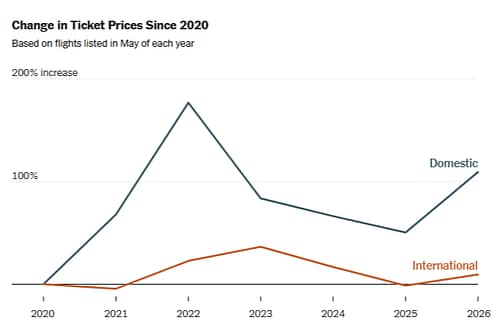
Source: From "How Much Have Airfares Risen With High Jet Fuel Costs?" by Ben Blatt and Christine Chung, 2026, The New York Times, Copyright 2026 by The New York Times.
What's Driving Airfare Prices Higher?
This is not breaking news: flights that seemed reasonably priced a year ago now often cost hundreds of dollars more, particularly during peak travel periods. The largest contributor has been the dramatic rise in jet fuel prices. Airlines typically spend between 20 and 30 percent of their operating budgets on fuel, making it one of their biggest expenses. Geopolitical instability and disruptions to global oil supplies have caused jet fuel prices to rise significantly throughout 2026, and airlines have responded by increasing fares and, in some cases, adding fuel surcharges.
Fuel costs are only part of the story. Airlines are also reducing service on less profitable routes while maintaining strong pricing power on routes where demand remains high. At the same time, leisure and business travel demand has remained resilient, allowing many carriers to keep fares elevated rather than competing aggressively on price. For travelers, the result is simple: getting from Point A to Point B now costs substantially more than many organizations anticipated when annual budgets were established.
For companies hosting meeting, airfare is rarely an isolated expense. So when transportation costs increase unexpectedly, something else usually has to give. Sometimes that means reducing décor budgets, shortening programs, or overall reducing the number of attendees. That's why experienced planners are increasingly evaluating destinations through the lens of affordability.
Destination Accessibility Is Becoming More Important
Boutique destinations have undeniable appeal. A secluded mountain resort or an exclusive coastal retreat can create an incredible attendee experience. The challenge is getting everyone there. Many smaller destinations rely on regional airports with limited airline service. Fewer airlines typically mean less competition, fewer daily flights, more connections, and higher average ticket prices.
By comparison, major convention cities often benefit from multiple competing airlines, dozens or even hundreds of daily arrivals, and direct flights from across the country. More competition generally creates more pricing options and greater flexibility for attendees. That's one reason destinations like Orlando, Chicago, Dallas, Las Vegas, Phoenix, and Denver continue to perform well for large corporate meetings. Their large airports provide planners with more opportunities to control one of the fastest-growing costs in an event budget.
Budgeting Looks Different Than It Did a Year Ago
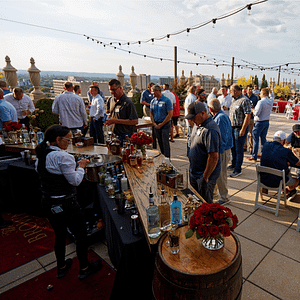
Who says you need a passport to wow your team? The U.S. has plenty of incentive-worthy destinations, like Louisville, Kentucky.
Many organizations build annual event budgets months (or years) before registration opens. A sudden increase in airfare can create unexpected pressure long after contracts have been signed. We're seeing planners revisit contingency budgets more frequently than ever. Travel assumptions that felt conservative twelve months ago may no longer reflect today's market. That makes early planning even more valuable. Building flexibility into budgets allows organizations to absorb travel fluctuations without sacrificing the guest experience. It's also becoming increasingly important to monitor airfare trends throughout the planning process instead of treating travel as a fixed cost.
Incentive Travel Requires Extra Strategy
Incentive programs are designed to reward top performers with memorable experiences. Unfortunately, rising airfare can quickly reduce the perceived value of those programs. When companies spend significantly more simply getting winners to the destination, there may be less budget available for premium accommodations, exclusive excursions, elevated dining, or personalized experiences that make incentive trips truly special.
That doesn't necessarily mean choosing a less exciting destination. Selecting a city with stronger airline competition allows planners to reinvest dollars back into the experience itself. And with domestic airfare sometimes approaching the cost of international flights, it may be worth rethinking what's possible. Instead of planning another meeting in a major U.S. city, why not consider London? As the gap between domestic and international airfare continues to narrow on some routes, destinations that once seemed out of reach could become practical options for future meetings and incentive programs.
Planning Smarter, Not Smaller
Higher airfare looks scary on your bottom line, but that doesn't mean companies should stop investing in face-to-face meetings. It may just be time to take a second look at the location; consider airport accessibility alongside venue quality, airline competition alongside hotel rates, and total attendee travel costs alongside event production expenses. The most successful events are increasingly balancing creativity with practicality. Those conversations may not be as exciting as choosing themes or designing immersive experiences, but they often have a bigger impact on the final budget.
As airfare continues to fluctuate, choosing the right destination has become more strategic than ever. Looking beyond venue pricing and evaluating the complete cost of attendance helps organizations protect their budgets while still delivering exceptional experiences.
That's where experienced event planners can provide real value. By weighing accessibility, transportation costs, destination appeal, and attendee experience together, it's possible to create an event that feels exceptional without allowing rising travel costs to derail the budget.