
Corporate Event Planning for First-Time Marketing Managers: A Complete Guide
At some point, it happens to almost every marketing manager. You're wrapping up one project when someone says, "We'd love for you to take the lead on this year's conference." Maybe it's a customer event, a sales kickoff, an executive retreat, or an incentive trip. Whatever the event, there's one small catch: you've never planned one before. Welcome to the club. The good news is that you don't need years of event experience to produce a successful corporate event. You simply need a process. That's exactly what this guide is designed to give you. We'll walk through the same questions we ask our own clients, explain why each decision matters, and help you avoid many of the common pitfalls first-time planners encounter.
By the end, you'll have a clear roadmap for planning a successful corporate event, from defining your goals and building a budget to selecting the right venue, managing vendors, and leading your event with confidence.
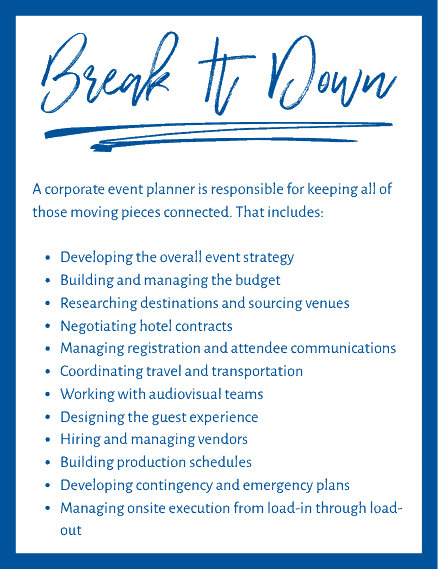
So, What Does a Corporate Event Planner Actually Do?
A huge misconceptions about event planning is that it's mostly about picking pretty décor and choosing a menu. We wish it were that simple. The reality is that event planning is equal parts creative, logistical, financial, and strategic. Long before guests walk through the doors, hundreds of decisions have already been made behind the scenes.
In other words, event planners spend months preventing problems that attendees will hopefully never know almost happened. If you're planning your company's event yourself, congratulations. Whether you realize it yet or not, you've inherited all of those responsibilities.
However, you don't have to tackle them all at once. Event planning is much more manageable when you break it into a series of decisions rather than viewing it as one giant project.
Let's start with the most important one.
Step 1: Define the Purpose of Your Event
Before you look at destinations or request hotel proposals or even think about centerpieces or cocktail menus, you need to ask one simple question: Why are we hosting this event? It sounds obvious, but it's surprisingly common for companies to jump straight into logistics before they've clearly defined what success actually looks like. Every decision from this point forward should support that purpose.
For example, a sales kickoff might focus on energizing employees, celebrating wins, and introducing new initiatives for the year ahead. That event will likely include keynote presentations, recognition moments, networking opportunities, and team-building activities. A customer conference has a different objective. It may prioritize education, relationship building, thought leadership, and showcasing new products. Suddenly your agenda, breakout sessions, exhibit space, and speaker lineup become much more important. An executive retreat may require something entirely different. Leadership teams often benefit from smaller, quieter environments that encourage discussion and strategic planning rather than large-scale production. Every event has its own definition of success.
Start with Your Objectives
Before anything else, gather your key stakeholders and agree on what you're trying to accomplish. Some common goals include launching a new product or service, strengthening client relationships, recognizing top performers, improving employee engagement, or celebrating company milestones. Notice that none of those goals mention décor, catering, or entertainment. The event itself isn't the objective, it's simply the vehicle that helps you achieve one. When everyone agrees on the destination, it's much easier to choose the route that gets you there.
Identify What Success Looks Like
Our favorite question to ask clients is: "Imagine we're sitting together the week after your event. What would make you say it was an overwhelming success?" That question almost always changes the conversation. Instead of discussing linen colors or coffee breaks, we start hearing things like, "Our sales team leaves feeling energized about the year ahead," or, "Attendees stay for the networking reception and leave with meaningful new connections." Those are measurable outcomes, and they're much more valuable than deciding whether the centerpieces should be two inches taller. Once you define success in practical terms, every planning decision becomes easier because you have a clear benchmark to guide you.
Once you have your "why", everything else will fall into place.
Keep Stakeholders Aligned
A very overlooked part of corporate event planning has nothing to do with venues, budgets, or production schedules. It's communication. Corporate events often involve stakeholders from across the organization, and while everyone wants the event to succeed, they may have very different ideas about what success looks like. Leadership may be focused on business outcomes, marketing may prioritize attendee engagement, and finance may be watching every budget line. Keeping those groups aligned throughout the planning process is just as important as aligning them at the beginning.
Establish regular check-ins to share progress, review budgets, discuss key decisions, and flag potential challenges before they become larger issues. Consistent communication builds confidence, encourages collaboration, and helps prevent last-minute surprises that can derail weeks of thoughtful planning. When stakeholders stay informed, decisions can happen more efficiently, expectations remain realistic, and your team can stay focused on creating an event that supports the goals everyone agreed on from the start.
Know Your Audience
Once you've aligned your internal team, it's time to focus on the people the event is actually for. The best corporate events are designed around what attendees value, not around what planners think is exciting. (We know...it's a bummer for us sometimes, too.) Take some time to understand who will actually be in the room. Are they first-time attendees? Senior executives? Existing clients? Prospective customers? Each audience arrives with different expectations, priorities, and motivations.
For example, a room full of software developers may appreciate a very different agenda than a room full of sales professionals. The better you understand your audience, the easier every future decision becomes, from venue selection and session formats to food and beverage, networking opportunities, and entertainment.
Avoid Planning for Yourself
This is the easiest traps for first-time planners to fall into. Just because you love a particular city, restaurant, activity, or entertainment option doesn't automatically make it the right choice for your attendees. The most successful event planners learn to separate their personal preferences from what will best serve the audience.
Build Your Event Around the "Why"
Once your objectives are clearly defined, you'll probably notice something surprising: planning becomes much less overwhelming. Choosing a venue becomes easier because you know what kind of space your event actually requires. Building a budget becomes easier because you understand where your biggest investments should be. Whenever you're faced with a difficult decision, return to one simple question: "Does this help us accomplish the purpose of our event?" If the answer is yes, you're probably moving in the right direction. If not, it may still be a great idea, but it's probably the right idea for a different event.
Once you've established a clear purpose, every other decision starts becoming easier. You know what you're trying to accomplish, who you're designing the event for, and what success looks like. The next question every first-time marketing manager asks is just as important: How much is this actually going to cost?
 Step 2: Build a Realistic Budget
 Step 2: Build a Realistic Budget
Let's address the question that is probably already sitting in the back of your mind. How much is this going to cost? The honest answer might not seem helpful at first because... it depends. The size of your event, destination, length of program, hotel, season, food and beverage expectations, entertainment, production level, and dozens of other factors all influence the final budget. There isn't a universal "cost per attendee" that works for every event, and anyone who tells you otherwise is probably oversimplifying things. Building a realistic budget only requires understanding where your money is actually going.
Understand Where the Money Goes
It might be a surprise for first-time planners to see just how many expenses happen behind the scenes. A ballroom might appear "free" because you're meeting a hotel food and beverage minimum, but that doesn't include labor charges, service fees, taxes, internet, power drops, rigging, loading dock fees, or overtime costs.
Similarly, your audiovisual proposal is often much more than microphones and projectors. It can include staging, lighting, scenic elements, confidence monitors, speaker timers, video playback, recording, livestreaming, graphics support, rehearsals, technicians, and even show calling. Even transportation isn't simply booking buses. It involves manifests, arrival schedules, dispatchers, ADA accommodations, airport coordination, and contingency planning when flights are delayed. None of these costs are hidden, but they are the, often unseen, reality of producing a successful event. Knowing they exist early helps you avoid unpleasant surprises later.
Spend Where Guests Can See and Feel It
If you've spent any time around the Blue Spark team, you've probably heard us say this before: invest where your guests can actually see and feel the difference. Our CEO and Executive Producer, Heather Pilcher, CSEP, CMP, is this close to getting this phrase tattooed on her forehead. Seriously though, it's one of the philosophies we return to over and over because it works.
Building an event budget is ultimately about making intentional choices. Every dollar you spend should support the goals you established at the beginning of the planning process. Sometimes that means investing in a memorable welcome reception that encourages networking. Other times, it means allocating more budget toward a keynote speaker who will leave a lasting impact on your audience. There isn't a universal formula for where every event should spend its money. What matters is understanding which investments move your event closer to its objectives and which simply add cost without adding value. A thoughtful budget isn't about spending more. It's about spending with purpose.
Don't Forget Your Contingency Fund
Where are you investing your event budget? Can your guests feel or see it?
Here's a little secret about event planning: something will change last minute. Maybe a speaker misses a flight or weather forces a backup transportation plan. Maybe your CEO decides they'd love to add an extra reception...three weeks before the event. None of these situations are unusual.
That's why experienced planners build contingency funds into every budget. A good rule of thumb is to reserve roughly five to ten percent of your total budget for unexpected expenses. You may not need it, but you'll be grateful it's there when something inevitably changes. Think of it less as "extra money" and more as breathing room.
Review Your Budget Frequently
Your event budget isn't something you build once and revisit the week before the event. It's a living document. As proposals come in, vendors are selected, attendee numbers change, and leadership requests evolve, your budget should evolve alongside them. Reviewing it regularly allows you to identify potential issues early rather than scrambling to solve them at the last minute. It also gives stakeholders confidence that resources are being managed responsibly throughout the planning process.
A thoughtful budget gives you confidence in what you can afford, but knowing your budget is only part of the equation. The next challenge is understanding when everything needs to happen. Building a realistic planning timeline will keep your project moving forward, help you avoid unnecessary stress, and give you the flexibility to make better decisions along the way.
Step 3: Build Your Planning Timeline
A common question we hear from first-time marketing managers is, "When should I actually start planning?" The answer is almost always the same: earlier than you think.
A misconception about corporate event planning is that most of the work happens in the weeks leading up to the event. Really, the strongest events are built over months of thoughtful planning, giving your team the time to make strategic decisions instead of rushed ones. That's especially true for conferences, incentive trips, and multi-day meetings where venues, hotel rooms, keynote speakers, and even transportation can book up months, sometimes years, in advance. A realistic timeline gives you options, and in event planning, options are always a good thing.
 Start With the Decisions That Have the Biggest Impact
 Start With the Decisions That Have the Biggest Impact
It's tempting to begin planning with the fun stuff. Maybe you've already started a Pinterest board, saved photos of incredible stage designs, or found the perfect entertainment act on social media. We completely understand the temptation, those creative pieces are exciting. The challenge is that many of those decisions depend on choices you haven't made yet.
For example, you can't finalize a stage design until you've selected a venue and you shouldn't confirm transportation until attendees know where they're staying. Even something as simple as event branding often works better once the destination, venue, and overall experience have been established. Think of your planning timeline like building a house. The paint colors matter, but not before you've poured the foundation.
Give Yourself Room to Make Better Decisions
The largest benefits of planning early is creating space to make thoughtful decisions instead of rushed ones. When you're booking a venue twelve months in advance, you typically have more dates to choose from, greater negotiating power, and a wider selection of hotels. The same is true for speakers, entertainment, photographers, and many of your other event partners. Planning ahead also gives you time to compare options, gather stakeholder feedback, and adjust your approach if priorities change. That's much harder to do when every decision feels urgent.
Expect the Timeline to Change
One thing you'll quickly discover: no matter how carefully you build your timeline, it will evolve. Leadership may decide to add another session or attendance projections might increase, or you may need to adjust the agenda based on the flow of the space after seeing it in person. Those changes are simply part of producing a live event with lots of moving pieces. The purpose of a timeline is to create enough structure that your team can adapt confidently when things inevitably change.
With your budget established and your planning timeline taking shape, you finally get to decide where your event should take place. While it's easy to focus on destinations you've always wanted to visit, the best choice is usually the one that makes attending your event as easy and enjoyable as possible.
Step 4: Choose the Right Destination
Once you've established your goals and have a realistic understanding of your budget, it's time for the most fun parts of planning. Where should your event actually take place?
It's tempting to start with destinations you've always wanted to visit or cities you've heard great things about and there's nothing wrong with dreaming a little. However, the best destination isn't always the most exciting one, but the one that makes attending your event easy.

Which of these amazing locations is your dream event location?
Think Like an Attendee
Imagine you're receiving the invitation. How difficult will it be to get there? Will attendees need multiple connecting flights? Are hotel options plentiful? Can guests easily walk between the hotel, restaurants, and offsite activities? Every extra layer of travel complexity creates friction. The easier you make the journey, the more likely attendees are to arrive excited instead of exhausted.
Consider the Time of Year
Seasonality matters much more than the weather. Hosting an event in Orlando during spring break creates a very different experience than visiting in early fall. Even major conventions happening nearby can dramatically impact hotel availability and pricing. Before committing to dates, research what's happening in the destination that week. A citywide convention may mean fewer hotel rooms, higher rates, longer wait times, and increased transportation costs.
Match the Destination to the Event
The destination should reinforce your event goals. A leadership retreat might benefit from a quiet resort where executives can disconnect from daily distractions. A customer conference often performs well in destinations with excellent airlift, walkable entertainment districts, and plenty of dining options. An incentive trip should feel aspirational and rewarding. In short, there isn't one perfect destination for every corporate event. There is only the destination that best supports your objectives.
Outside the Hotel
An opportunity many planners overlook is what happens outside of scheduled sessions. What restaurants are nearby? Are there unique offsite venues? Can attendees easily explore the city during free time? Are there memorable local experiences that reinforce your event? Some of the strongest networking moments happen over dinner, during an offsite experience, or while walking between venues. Choosing a destination that naturally encourages those interactions can significantly improve the attendee experience.
Don't Forget Accessibility
Accessibility goes way beyond ADA compliance. Consider whether attendees with different mobility needs can comfortably navigate the venue and surrounding area. Think about transportation options, dietary accommodations, and the overall ease of moving through an event location. An event should feel welcoming to every guest from the moment they arrive. The more barriers you remove, the more enjoyable the experience becomes.
Choosing the right destination lays the foundation for your event, but your attendees won't remember the airport they flew into or the city they visited nearly as much as they'll remember where the event actually took place. Now it's time to find the venue that will bring your vision to life.
Step 5: Find the Right Venue
Once you've established your goals, chosen a destination, and have a realistic understanding of your budget, it's time to start looking at venues. This is often the part of planning people are most excited about. Site visits, tasting menus, beautiful ballrooms, rooftop receptions...it's easy to see why. It's also where many first-time planners make a big mistake. A venue influences how attendees move through the day, where conversations happen, how your brand is experienced, and how much work your team will be doing behind the scenes.
Look Beyond the Ballroom
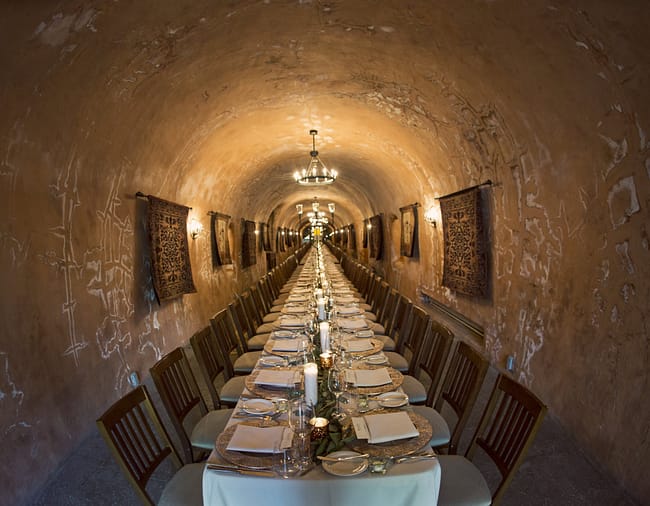
Why have your dinner in a hotel ballroom when it could be held in a wine cask tunnel?
When you're touring venues, it's natural to focus on what you can see. Is the ballroom beautiful? Does the lobby make a good first impression? Is the guest room recently renovated? Those things certainly matter, but experienced planners tend to look at venues a little differently. Rather than imagining an empty ballroom, we imagine an event in progress. Guests are arriving from the airport while another group is checking into the hotel. Registration is opening. Coffee stations are filling up. A keynote speaker is rehearsing backstage. Exhibitors are unloading crates through the loading dock. A VIP needs a quiet place to take a phone call before walking onstage.
Suddenly, you're looking at the property through a completely different lens. Is there enough pre-function space so registration doesn't back up into the hallway? Can attendees naturally move between breakout rooms, or will everyone bottleneck in one corridor? Is there somewhere comfortable for networking during breaks, or will guests simply return to their rooms? The best venues support the experience you're trying to create without making attendees think about the logistics behind it.
Hotels vs. Unique Venues
The first decision you'll make is whether your event should take place at a traditional hotel or somewhere a little more unexpected. Hotels are popular for a reason. They simplify nearly every aspect of planning. Guest rooms, meeting space, catering, audiovisual services, and event staff are often all under one roof. For conferences and multi-day meetings, that convenience can be invaluable. Attendees spend less time commuting and more time connecting with one another. But, that doesn't mean hotels are always the right answer.
Sometimes a museum, sports venue, historic building, or private attraction creates an experience that perfectly complements your event's goals. A customer appreciation event held at an aquarium feels very different than one hosted in a ballroom. A product launch inside an industrial warehouse may reinforce a brand story far better than a traditional conference center ever could. Of course, those memorable venues usually come with additional planning considerations. Transportation becomes more complicated. Outside catering may need to be brought in. Power, lighting, staging, furniture, and décor often need to be built from the ground up rather than simply enhanced.
What You Don't See Matters Just as Much
 What You Don't See Matters Just as Much
The biggest difference between first-time planners and experienced event professionals is where they're looking during a site visit. While everyone else is admiring chandeliers and décor, we're usually asking to see the loading dock. There's a reason for that.
Some of the most important parts of an event happen in spaces your attendees will never visit. After all, vendors need somewhere to unload equipment and speakers need a quiet green room before taking the stage. Even something as simple as ceiling height can dramatically affect your event. If you've envisioned an impressive stage set or dramatic lighting design, a low ceiling can limit what's possible. Likewise, a room with beautiful natural light may be perfect for daytime networking but become challenging when presentations require darker conditions.
The Proposal Isn't the Whole Story
Comparing venue proposals can feel a bit like comparing airline tickets. One looks less expensive... until you start adding everything that's missing. A venue may appear to fit comfortably within your budget until you realize internet is billed separately, audiovisual isn't included, service charges significantly increase your food and beverage costs, or additional meeting space comes with rental fees you hadn't anticipated.
Then there are the contract terms themselves: room blocks, food and beverage minimums, attrition, complimentary rooms, resort fees. For first-time planners, those terms can feel intimidating. Luckily, you don't need to become a contract attorney overnight. You simply need to understand that the first proposal is rarely the full picture. Many aspects of a hotel contract are negotiable, especially when you're booking well in advance or bringing a sizeable group. An experienced planner knows where there's flexibility and where there isn't, helping clients maximize their investment without sacrificing the attendee experience. Your goal isn't necessarily to secure the lowest price, but instead to understand the total cost of producing your event. A great venue should make your event feel easier, not more complicated. When attendees can navigate the property comfortably and your agenda fits naturally within the building, that supports the overall success of your event.
With your venue secured, the focus naturally shifts from where your event will happen to what your attendees will experience once they arrive. This is where thoughtful planning begins to transform into intentional event design, and where every interaction starts shaping how your brand will be remembered.
Step 6: Create the Attendee Experience
With the venue secured, it's tempting to shift your attention straight to the agenda. You'll start filling presentation slots, confirming speakers, and building out the event timeline. All of that is important. But an important shift we encourage first-time marketing managers to make is thinking beyond the schedule and focusing on the experience. Most attendees won't remember your event because it stayed perfectly on schedule. They will remember whether they made valuable connections, whether they were inspired, and whether your event felt like it was worth their time. That's the experience you're designing.
Every Touchpoint Reinforces Your Brand
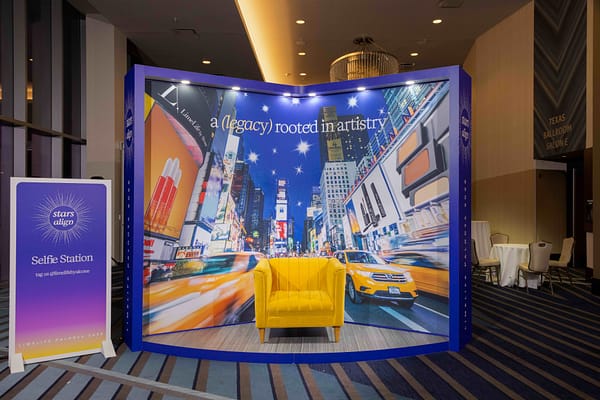
When a client has an audience that focuses on social media posting, custom built photo sets are a good use of their budget for sure.
Whether you realize it or not, your event is telling attendees something about your organization from the moment they receive the invitation until they head home after the closing session. A registration website that's easy to navigate communicates professionalism. Thoughtful signage communicates attention to detail. A networking reception that feels welcoming communicates that relationships matter. Even the way your team greets attendees at registration contributes to the story your brand is telling.
That's why we encourage clients to think beyond décor or entertainment and instead consider how every interaction contributes to the overall impression guests leave with. The strongest corporate events don't rely on one unforgettable moment to define the experience. They create consistency from beginning to end, reinforcing your company's values through hundreds of thoughtful decisions that work together to tell one cohesive story. Long after attendees forget the agenda, they'll remember how your organization made them feel. That's the most powerful branding opportunity any event can create.
The Best Networking Happens Naturally
The most common goal we hear from clients is simple: "We want people to connect." The challenge is that networking doesn't happen because it's printed on the agenda. We've all attended receptions where dozens of people stand around the edges of the room waiting for someone else to start the conversation. On the agenda, it's a networking event. In reality, everyone is checking their phones while pretending to look busy.
Creating meaningful interaction requires a little more intention. Think about how people naturally gather. Comfortable seating areas invite longer conversations than rows of cocktail tables. Interactive experiences give strangers something to talk about. Food stations spread throughout the room encourage movement instead of creating one long buffet line. Sometimes it's the smallest design decisions that make the biggest difference. Even the timing of networking matters. Scheduling a reception immediately after an inspiring keynote often creates more energy than placing it after a full day of back-to-back presentations when attendees are mentally exhausted.
Spend Where Guests Will Notice

The creative touches are what makes your event memorable, like picking up a packet of wild flower seeds from a flower cart.
Earlier, we talked about building a realistic budget. This is where that philosophy really comes to life. Whenever possible, invest in the parts of the event your attendees will actually experience.
Thoughtfully designed décor can reinforce your message without saying a word and a unique entertainment experience can turn a standard reception into the highlight of the entire program. None of these investments need to be extravagant to be effective. What matters most is that they're intentional and aligned with your event goals. At the same time, remember that more isn't always better. Sometimes the most memorable experience comes from creating space for authentic conversations instead of filling every moment with activity. As with every planning decision, the question is, "Will this make the attendee experience better?"
If you're interested in learning more about how to spend where your guests will see it, check out our Stop Wasting Your Money blog.
Leave Room for Surprise and Delight
Think back to the last event you genuinely enjoyed. Chances are there was one unexpected moment that stuck with you. Maybe it was a surprise local experience that wasn't listed on the agenda, or an unforgettable speaker, or an interactive activation that had everyone talking. Those moments don't just happen. The best events include small surprises that make attendees feel like they're part of something special. That doesn't mean every event needs fireworks or celebrity performances. Often, it's the thoughtful details that have the greatest impact.
A locally inspired welcome gift can create a stronger connection to the destination than an expensive piece of generic swag. Even something as simple as remembering repeat attendees by name can make guests feel genuinely valued. These details communicate something important: "We thought about you."
Creating a memorable attendee experience doesn't begin when guests walk through the ballroom doors. It starts weeks, and sometimes months, earlier through every invitation, email, registration page, and confirmation message they receive. That's why registration and guest communication deserve just as much attention as your onsite program.
Step 7: Registration and Guest Communication
Ask any attendee where their event experience begins, and they probably won't say "when I walked into the ballroom." It actually begins the moment they receive the invitation. Before they've booked a flight, packed a suitcase, or met another attendee, they're already interacting with your event. They're clicking through your registration website, reading confirmation emails, and trying to answer one very simple question: "Am I in good hands?" Every interaction either builds confidence or creates uncertainty. That's why registration deserves far more attention than it often receives.
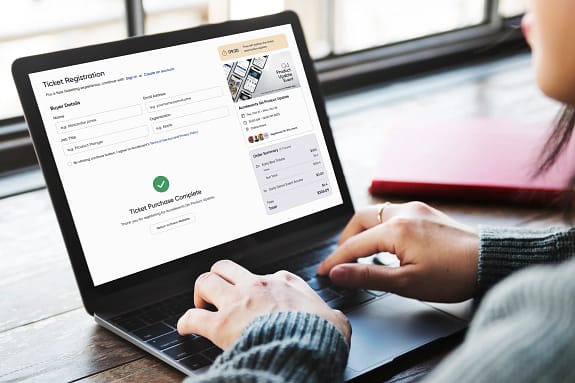
Registration may not be glamorous, but it's essential to get it right.
Registration Is Part of the Experience
It's easy to think of registration as an administrative task. Collect some names, gather dietary restrictions, print a few badges, and move on. In reality, it's one of the most important touchs point in the attendee journey. A clean, easy-to-navigate registration website tells attendees you've thought through the details. Clear communication helps eliminate unnecessary questions before they're ever asked. Confirmation emails reassure guests that everything is on track, while reminder emails build excitement instead of simply repeating logistics. By the time attendees arrive onsite, they should already feel like they know what to expect.
Make It Easy to Say "Yes"
Every extra click, confusing question, or unnecessary form field increases the chance that someone abandons the registration process altogether. As you're building your registration platform, continually ask yourself whether each piece of information is actually necessary. Does the attendee really need to answer fifteen questions today, or could some of that information be collected closer to the event? Could the instructions be written more clearly? Is the mobile experience just as easy as using a desktop computer? Think about registration from the attendee's perspective, not the planner's. They're trying to complete a task quickly and confidently. Your job is to remove as many obstacles as possible.
Communication Builds Confidence
A common mistake we see isn't the registration platform itself, it's assuming attendees know what happens next. Once someone registers, they shouldn't be left wondering whether their registration went through, when they'll receive additional information, or what they should do before arriving. Every communication should answer the next question before attendees have to ask it.
A confirmation email should reassure them that they're successfully registered and explain what comes next. Reminder emails should include practical information like hotel details, transportation instructions, dress code, weather considerations, and important deadlines. As the event approaches, communication should become more helpful, not more overwhelming. When attendees feel informed, they're more likely to arrive relaxed and ready to engage instead of searching through old emails for parking instructions five minutes before registration opens. If you are interested in learning more about registration and how to make the process as smooth as possible, check out our Registration Tips & Tricks blog.
Your First Opportunity for Inclusion
Registration is your first opportunity to understand what your attendees need in order to have a comfortable, successful experience. As you're building your registration form, think beyond the basics. Will attendees have dietary restrictions or food allergies? Does anyone require accessible seating, mobility accommodations, or sign language interpretation? Will there be nursing parents who would benefit from a dedicated lactation room? Are there accessibility needs or medical considerations your team should be aware of before event day? Gathering this information early gives you time to work with your venue and vendors to make thoughtful accommodations rather than scrambling to solve challenges onsite.
Perhaps more importantly, it sends a clear message to your attendees: "We've thought about you." Creating an inclusive event is the result of asking the right questions, listening carefully, and planning ahead. When attendees feel welcomed, respected, and supported from the very beginning, they're free to focus on why they came in the first place: enjoying the experience you've created.
The Onsite Experience Should Feel Effortless
Once attendees arrive, registration should reinforce the confidence you've already built. Long lines, confusing signage, and understaffed registration desks can quickly undo months of careful planning. On the other hand, a warm greeting, clear directions, and an efficient check-in process immediately tell guests they're exactly where they're supposed to be. Small details matter here.
Badges should be easy to read. Registration counters should be clearly organized. Staff should be visible, approachable, and empowered to solve problems without sending attendees from table to table looking for answers. Even something as simple as having an extra printer onsite or blank badge stock readily available can prevent minor hiccups from becoming memorable frustrations. By the time attendees reach the registration desk, you've already invested months of planning to get them there. A warm welcome is your opportunity to reinforce that all of that effort was worthwhile and set the tone for everything that follows.
By the time registration opens, your attendees have already started forming opinions about your event. Behind the scenes, another important piece of the puzzle is coming together as well: the team that will help bring everything to life. Managing that team effectively will make the difference between a good event and a great one.
Step 8: Vendor Management
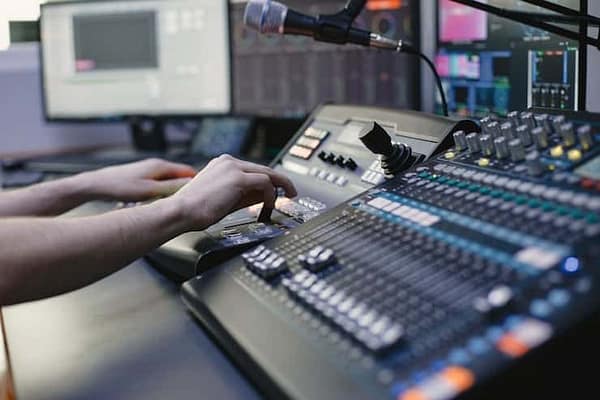
A good vendor is worth it's weight in gold.
By the time your event arrives, you may have a photographer, audiovisual company, florist, transportation provider, entertainment, decorator, registration platform, signage partner, caterer, venue staff, and half a dozen other specialists all working toward the same goal. At least, that's how it's supposed to work.
Another surprise for first-time planners is realizing that hiring great vendors doesn't automatically create a great event. Every vendor may be exceptional at what they do, but unless someone is coordinating the bigger picture, it's surprisingly easy for small disconnects to become larger problems. Successful events happen when everyone understands not only their own responsibilities, but how their work impacts everyone else.
You're Not Managing Vendors. You're Leading an Orchestra.
Our favorite ways to describe event production is conducting an orchestra. Every musician knows how to play their instrument. The conductor isn't teaching the violinist how to perform or showing the percussionist how to keep rhythm. Their job is to make sure everyone is working together to create one cohesive performance. Event production works much the same way. Each vendor is concentrating on their own piece of the puzzle, but someone still has to make sure all of those pieces fit together.
For example, a lunch service running fifteen minutes behind schedule doesn't just affect catering. It changes the timing for speakers, impacts audiovisual cues, shortens networking breaks, delays transportation departures, and can even affect hotel staff preparing the next meeting space. One small adjustment rarely stays small. Communication is one of the most valuable skills an event planner brings to the table. That's one reason many organizations choose to work with an experienced event production partner who can serve as the central point of coordination.
Communication Is the Real Deliverable
When people think about event planning, they often picture mood boards, floral arrangements, or beautiful tablescapes. In reality, a significant portion of event production is communication. Months before your attendees arrive, your planning team is holding production meetings, reviewing timelines, and making sure every vendor has the information they need to be successful. The goal is ensuring everyone is working from the same version of the plan. That becomes especially important as changes inevitably happen.
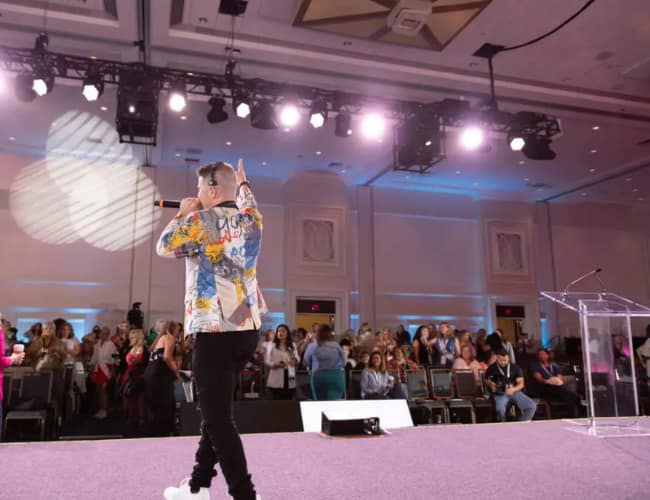
All of the above is courtesy of reliable and talented vendors.
Perhaps your keynote speaker requests a different stage setup. Maybe attendance increases and another shuttle is needed. Perhaps weather requires moving an outdoor reception indoors. None of those changes are unusual, but it matters how quickly information reaches every person affected. A well-informed team can adapt remarkably quickly... and a poorly informed team often spends valuable time trying to catch up.
This level of coordination is why many organizations choose to partner with an experienced event production team. Having a single group responsible for communication helps ensure information moves quickly, everyone stays aligned, and small changes don't become larger operational challenges.
Experience Shows Up Long Before Event Day
An advantage of working with experienced vendors is that they often identify potential issues before they become actual problems That's why we value long-term vendor relationships so highly. When you've worked alongside trusted partners for years, communication becomes more proactive and everyone understands the level of service expected.
It's less about familiarity and more about shared standards—something a seasoned production partner helps establish and maintain across the entire team. Behind every successful event is a planning team making sure everyone is working from the same timeline, the same floorplan, and the same vision. Good communication removes uncertainty, gives vendors the confidence to do their best work, and allows the entire production to move together instead of in separate directions.
Even the strongest team can't predict every twist and turn that event day might bring. Flights get delayed, weather changes, and last-minute requests inevitably pop up. The goal isn't to prevent every challenge, but to be prepared enough that your attendees never feel the impact.
Step 9: Risk Management
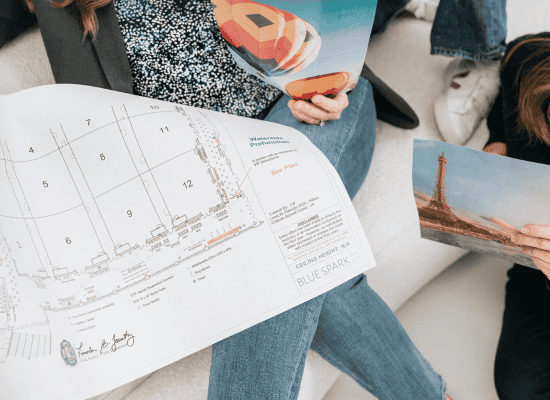
Yes, this is a photo shoot with a fire marshal approved floor plan. That's just how event planners roll.
The quickest ways to spot an experienced event professional is by listening to the questions they're asking before an event ever begins. What happens if it rains? Where will attendees go if the power goes out? Who communicates with guests if the schedule changes? At first glance, those questions can sound overly cautious. In reality, they're simply part of good event planning. The goal of risk management is to make sure your team is prepared enough that, if something unexpected does happen, your attendees never have to feel the impact.
 The Best Backup Plans Are the Ones You Never Use
 The Best Backup Plans Are the Ones You Never Use
Every event has moving parts, and every moving part introduces the possibility that something could change. Flights are delayed, weather shifts, equipment occasionally malfunctions. These situations are far more common than most first-time planners realize, which is exactly why experienced production teams spend so much time preparing for them. A contingency plan doesn't have to be complicated. Sometimes it's as simple as identifying an indoor backup location for an outdoor reception, but it may also be coordinating alternate transportation, building additional time into the production schedule, or confirming backup equipment with your audiovisual partner. The important thing is having those conversations before the event begins. Solving a problem during a planning meeting is always easier than solving it in front of hundreds of attendees.
Risk Management Goes Beyond Emergency Response
When people hear the phrase "risk management," they often picture severe weather or large-scale emergencies. While those situations deserve thoughtful planning, they're only one part of the equation. Good risk management is woven into almost every decision you make throughout the planning process. It's making sure dietary restrictions are communicated correctly to the catering team and ensuring vendors know exactly who to contact if something changes onsite. Many of these details never receive applause, and that's perfectly fine; their purpose is to create an event that feels organized and well managed, even when the unexpected happens.
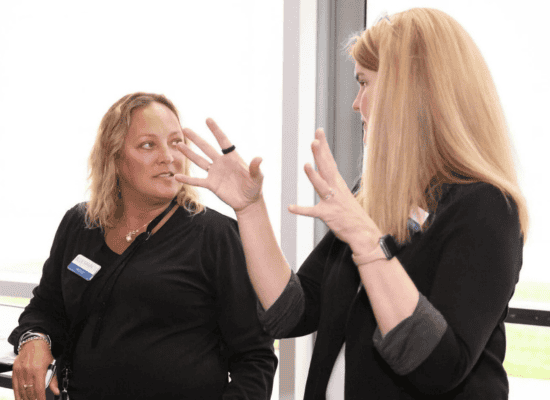
If safety is king, communication is the queen.
Communication Is Your Best Safety Tool
 Communication Is Your Best Safety Tool
Even the strongest contingency plan has one weakness if it isn't clearly communicated. The best contingency plans are documented, shared, and reviewed before anyone arrives onsite. When everyone understands their role ahead of time, responses become faster and more coordinated. Instead of multiple people trying to solve the same problem independently, your team can work together with confidence and consistency. We've found that this level of preparation often has another benefit as well. Teams that know there's a plan in place tend to remain calmer when challenges arise. That confidence is noticeable, and attendees often take their cues from the people around them.
Once contingency plans are in place, there's only one thing left to do: bring your event to life. Event day is where months of preparation, collaboration, and careful planning come together, and where strong leadership makes all the difference.
Step 10: Event Day Operations
After months of planning, countless meetings, site visits, revised timelines, and production calls, event day has finally arrived. And this is where your job changes completely. Planning is about making decisions, but event day is about leading people.
From the moment the first vendor arrives for load-in until the last truck pulls away after load-out, dozens of moving parts are unfolding simultaneously. Speakers are rehearsing, registration is opening, meals are being prepared, buses are arriving, presentations are being finalized, and your attendees are blissfully unaware of just how much coordination is happening around them.
Preparation Creates Flexibility
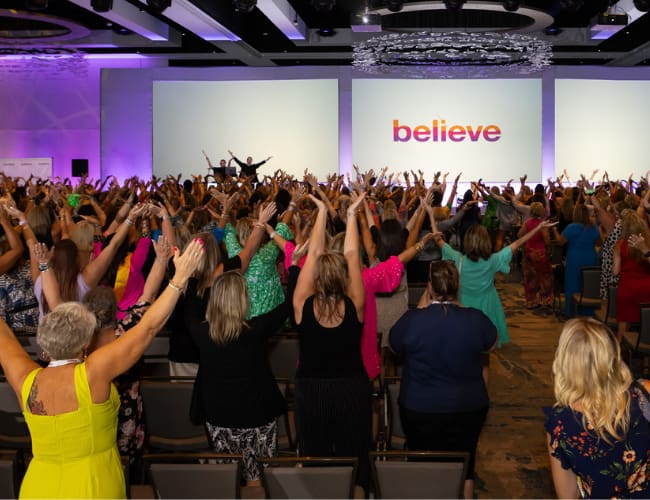
This is how it feels to have your event go off without a hitch.
One misconceptions about event day is that experienced planners spend the entire time putting out fires. While unexpected situations certainly arise, the best-produced events are remarkably calm behind the scenes because most of the work happened long before anyone arrived. Every production schedule, staffing plan, and contingency plan exists for one reason: to give your team the flexibility to adapt without creating unnecessary stress. Perhaps a session runs a few minutes behind schedule. Maybe a shuttle arrives later than expected or a speaker requests a small change to their presentation. Those situations rarely become major issues because everyone already understands the overall plan and knows how to adjust without disrupting the attendee experience.
The Run of Show Is Your Roadmap
Long before event day, your team should have developed what the industry often calls a "run of show" or production schedule. Think of it as the master document that keeps everyone moving together.
Rather than simply listing session times, a well-built run of show outlines who is responsible for each activity, when vendors need access to spaces, when presenters should arrive backstage, when meals are served, when transportation departs, and how transitions will happen throughout the day. Everyone may not need every detail, but everyone should understand how their piece fits into the larger picture.
Stay Present
Resist the urge to spend the day behind a laptop or at the registration desk. Walk the space regularly, observe how attendees are interacting with the environment, and check in with vendors throughout the day. Some of the best decisions you'll make onsite come from simply paying attention. You'll often notice small opportunities for improvement that never would have appeared on a planning checklist. It also reassures attendees, speakers, and vendors that someone is paying attention and ready to help if needed.
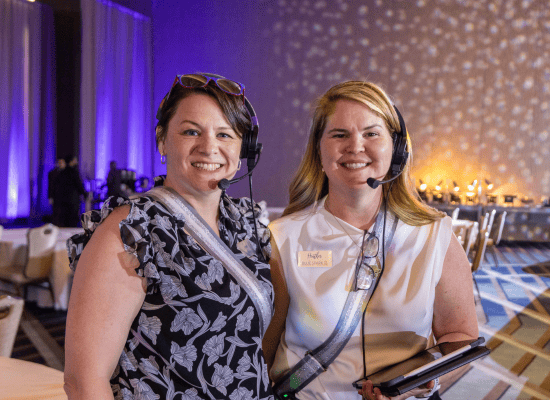
This is what it looks like on the day of the event. Busy, but staying present and enjoying the chaos.
Sometimes the Best Decision Is to Change the Plan
A lesson experienced planners learn is that the timeline isn't sacred, your attendees are. If a networking conversation is generating incredible energy, it may be worth extending the break by ten minutes. If weather rolls in earlier than expected, moving an outdoor activity inside isn't admitting defeat. It's making the best decision with the information you have. Some of the most successful event moments happen because someone recognized an opportunity or identified a challenge and wasn't afraid to adjust.
Leadership Creates Confidence
By the time event day arrives, your attendees are looking to your team for cues, whether they realize it or not. If your staff confidently answers questions, they'll trust they're in good hands. If an unexpected change is handled professionally and with clear communication, most guests will never realize anything changed at all. That's why leadership on event day is about far more than keeping a schedule on track. It's about creating confidence across everyone involved, from vendors and venue staff to speakers and attendees. That's the great advantage thoughtful planning provides. It gives your team the freedom to lead instead of simply react.
When the final attendee heads home and the last truck pulls away, it's tempting to think your work is finished. In reality, some of the most valuable lessons from any event are waiting to be uncovered. Taking the time to measure success, gather feedback, and reflect on what you've learned is what transforms one successful event into the foundation for the next.
Step 11: Measure Success
As the last attendees head to the airport and the final vendor packs up their equipment, it's tempting to think your event is officially complete. In reality, some of the most valuable work happens after the ballroom empties. The post-event phase is where you move beyond gut feelings and begin evaluating whether the event accomplished what it was designed to do. It's also your opportunity to gather insights that will make every future event stronger. The best event planners can't just report back that people had fun, they have to prove that the event achieved its purpose.
Go Back to the Goals You Set in the Beginning
Remember the conversation you had before planning even began? You identified why you were hosting the event and what success would look like. Now it's time to revisit those objectives with fresh eyes. Quantitative metrics matter too. Attendance, budget performance, session participation, sponsor engagement, and post-event surveys all help paint a fuller picture of whether your event achieved its goals.
Gather Feedback While It's Fresh

Analytics are your best friend if you want to grow your event from year to year.
Attendee feedback is perhaps the most valuable tools you have, but timing matters. Send surveys while the experience is still fresh in attendees' minds, and keep them concise enough that people will actually complete them. Instead of asking dozens of generic questions, focus on the areas that will genuinely help you improve.
Ask what sessions delivered the most value. Find out whether attendees felt they had enough opportunities to network. Learn what surprised them, what could have been better, and whether they'd attend again. Some of the best insights come from the comments people leave at the end of the survey. Those responses often reveal opportunities you never would have considered on your own.
Celebrate the Wins and Document the Lessons
Every event offers something to celebrate, and every event offers something to improve. Take time to meet with your internal team, venue partners, and key vendors while everything is still fresh. Discuss what worked particularly well, where challenges arose, and what you'd do differently next time. These conversations are never about assigning blame and they should feel like building a stronger playbook for future events. Some of the best processes we've developed as an agency came from asking one simple question after every event: "How can we make this even better next time?" That mindset of continuous improvement is why experienced planners become more effective with every event they produce.
Your Next Event Starts Today
A big surprise for first-time marketing managers is realizing that event planning isn't really a series of separate projects. Each event builds on the last. The relationships you strengthen with vendors today become valuable partners tomorrow and the lessons you document help your team avoid repeating the same challenges. Even something as simple as organizing your production documents, contracts, budgets, and timelines can save countless hours when the next event begins. The work you do after an event may not be as visible as designing a stage or hosting a reception, but it's often what transforms a good event into an even better one the following year.
Your First Event Won't Be Your Last
If you've made it this far, you've probably realized something: corporate event planning isn't about checking boxes or following a perfect timeline. It can feel overwhelming when you're planning your first corporate event, especially if event planning wasn't originally part of your job description. The good news is that every experienced event producer started exactly where you are now. We've all had a first event, a first site visit, a first production meeting, and a first moment where we realized just how many moving pieces go into creating an experience that feels effortless for everyone else.
The difference isn't that experienced planners never encounter challenges, but rather that they've learned how to anticipate them, adapt to them, and keep moving forward. That's why even though the steps in this guide matter so much, perhaps the most important lesson of all is that successful events aren't created by one person. They're built by teams of people working toward a shared vision. Whether that's your internal marketing team, trusted vendors, venue partners, or an experienced event production agency, surrounding yourself with the right people will always make the planning process smoother and the end result stronger. Your first event probably won't be perfect, and that's perfectly okay. Every event teaches you something new. Before long, you'll find yourself asking the same thoughtful questions and anticipating the same details that once seemed overwhelming.
And if you'd rather have an experienced team beside you from the very beginning, we'd love to help. At Blue Spark Event Design, we partner with organizations across the country to create corporate events that are thoughtful, strategic, and memorable. Whether you're planning your first leadership retreat, your annual sales meeting, a customer conference, or a large-scale incentive trip, we're here to help you navigate the process with confidence so you can focus on what matters most: creating an experience your attendees will remember for all the right reasons.
And the next time someone pops into your office and says, "We'd love for you to take the lead on this year's conference," you'll know where to start.